UPCOMING
This webinar will discuss the deployment of smoke detection solutions in harsh and challenging environments. ...
This one-hour webinar will provide an overview of the design of automatic fire sprinkler protection in challenging storage occupancies in accordance with the National Fire Protection Association Standard NFPA 13. ...
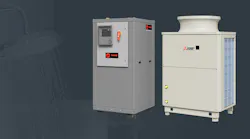
For the next hour, we will be discussing the HVAC industry’s most innovative technology—variable refrigerant flow, or VRF—and answer the five questions engineers should ask about VRF energy-efficiency data....
ARCHIVED
This Webinar will discuss strategies system designers, installing contractors, building owners, and system operators can employ to reduce the life-cycle cost of pumps...
This webinar will drill down to the facts on duct liner in healthcare facilities: the reasons for specifying duct liner in healthcare facilities; the state-by-state guidelines for using duct liner in hospitals; and the advantages of elastomeric foam duct liner in healthcare applications....
MODULATING FAN-POWERED ECONOMIZERS: Heat Recovery From Virtually Any Type of Heating Plant.
This Webinar will review modulating fan-powered economizers, which overcome the challenges faced by traditional economizers and make heat recovery possible for virtually any combustion appliance and heating plant. Economizers often underperform because of boiler-draft problems and design limitations. Improved control of draft, flue-gas flow, and water flow are keys to energy efficiency and optimal heat recovery—and often are overlooked.
This webinar will cover:
- What you need to know about the traditional economizer vs. the modulating fan-powered economizer.
- Creative flue-gas heat-recovery solutions for any boiler plant.
- Modulating fan-powered economizer systems for new installations and retrofits.
- True economizer performance.
- Typical installation examples.
Many commercial, health-care, and school buildings experience inefficient HVAC-system performance, complaints concerning occupant comfort, and increasing operation and maintenance costs. Often, the culprit is non-functioning or underperforming damper actuators and control valves. Precision is key to a successful damper-actuator and control-valve retrofit....
Integrating Solar Photovoltaic Systems With HVAC Rooftop Units
Sponsor: Lennox
Date: 4/27/2011, 2 p.m.
During summer, the electricity consumption of commercial rooftop HVAC units reaches its peak at the same time demand on the grid reaches its peak. For business owners, that means reduced comfort from load shedding or brownouts and increased electricity costs from demand charges and peak rates. Solar energy is a logical solution, as it is most readily available when HVAC-system electricity demand is highest. Giving system designers and building owners pause, however, are concerns over the complexity, cost, efficiency, reliability, flexibility, and safety of traditional solutions using photovoltaic (PV) panels with string inverters. This Webinar will discuss a new approach using microinverters to connect the electricity output of PV panels directly to a packaged rooftop unit without any modifications to a building’s electrical infrastructure.
Ceiling-Mounted Air Conditioners: A Cost-Effective Solution for Server Rooms
Sponsor: MovinCool
Thursday, February 17, 2011 / 2 pm EST
As businesses become more and more dependent on computers and telecom equipment to keep their critical operations running 24/7, they face a new challenge that often takes them by surprise: How to keep their server or telecom room cool when the building’s central air conditioning system is inadequate or is otherwise turned off—such as during off hours, weekends and holidays, or during cold-weather months, when the HVAC system is in heating mode. Adding to the difficulty is a lack of floor space. A relatively new class of self-contained, ceiling-mounted air conditioners can provide a cost-effective, space-saving solution.
- Self-contained, all-in-one units have lower installation costs than mini-splits or precision cooling systems
- No penetration of wall or roof required
- No outside condensing unit to maintain
- Compact size fits easily above drop ceiling, takes up no floor space
VFDs: An Emerging Sustainability Imperative
January 20, 2011, 2 p.m. ET/11 a.m. PT
Sponsor: Yaskawa/Schneider Electric
Variable Frequency Drives are quickly becoming key to an energy conscious society. In this webinar, presented by the Air Conditioning, Heating, and Refrigeration Institute (AHRI) contractors and engineers will learn what the best applications are for this technology and what its advantages are over other technologies. From design considerations and payback, to government mandates and local/regional initiatives, AHRI will share best practices that can help you see the role and value of VFDs today.
Designs That Impact Pump Efficiency & 3 Solutions to Improve Pumping Efficiency
On Demand
Designing smart, energy-efficient engineered piping systems that dramatically improve pump efficiency can be accomplished with even less space.
By immediately eliminating turbulent flow entering and exiting the pump in a fraction of space, and virtually eliminating pressure drops, engineers can right-size pumps and extend pump life, while achieving a well-balanced system.
Fire Protection Engineering webinars
Upcoming
In today’s environment, organizations must cope with many challenges ranging from increased operational costs, reliability of services, insurance costs, avoidance of incidents, increased frequency of accident, and adherence to regulatory compliance. Additionally, corporate image and environmental stewardship have growing implications in the global market....
The Society of Fire Protection Engineers will award attendees 0.1 CEUs for participating in the entire LIVE webinar. Those who attend the entire LIVE webinar will recieve a certificate of attendance....
Archived
You understand the importance of fire control and suppression, now it's time to become familiar with the specifics of water mist. In this session we will explain the critical changes and requirements of NFPA 750. We will cover the specific standards that dictate the design, installation, operation and maintenance required for water mist as defined by FM, UL, IMO and VdS....
You are invited to attend a webinar on carbon monoxide (CO) detection sponsored by NOTFIER by Honeywell. CO, often referred to as "The Silent Killer", claims hundreds of lives and sickens thousands of individuals each year. ...
This webinar describes a new approach to gas detection that utilizes techniques taken from very early warning aspirating smoke detection and applies it to detection of gases and vapors. ...
You understand the importance of emergency preparedness, now it's time to become familiar with the specifics of Mass Notification. In this session we will explain the critical changes and requirements of Chapter 24 of NFPA 72-2010. We will cover the specific standards that dictate the design, operation and interfaces required for Mass Notification as outlined by the Department of Defense's UFC 4-021-01 document. ...
Join this webinar to find out more about BIM, become familiar with the key concepts and tools, and to learn how to incorporate BIM into your business and start gaining immediate benefits!...
This webinar will discuss technological advancements of smoke detection for large open areas....
Evolution of Fire Detection in Industrial Applications
FREE On Demand
Applying reliable smoke detection systems in industrial applications has always been a challenge for most forms of fire detection due to varying environmental conditions. Aspects such as water vapor, corrosion, chemicals and particularly high-background dust or smoke levels all present enormous challenges. As the number of fire detection products constantly increase, with each product claiming to outperform the other, the question of “choice” emerges. Poor equipment selection can lead to late or ineffective detection, thus increasing the risk of property, business and potentially life loss. Selecting the most appropriate form of fire detection for the application and environment is the first step in reducing fire risk. But with a host of detectors available and many claiming to be suitable for harsh and difficult environments, how do you know which claims are true? Most of today’s technologies involve some form of compromise, require specific installation engineering techniques, or more frequent servicing or replacement intervals.
This webinar will discuss the challenges of smoke detection in industrial applications and the evolution of air-sampling smoke detection (ASD) as a technology for reliable very early warning in harsh and dirty environments.


Recent Comments